E‑commerce product pages. Blog and content marketing. Same problem everywhere: more AI content, harder to stand out.
A clear keyword workflow + templates that work in any market. Pay once — Solana or card.
One workflow · Any market · No $200/mo tools
Free takeaways
Cluster by intent — Group keywords into informational, commercial, and transactional so you know what content type to create.
Check the SERP first — See what’s ranking before you write; match the format and gaps that Google rewards.
Prioritize, then ship — Score difficulty and opportunity, then tackle the highest-impact items first.
Universal pain:
AI made it easy to publish—so everyone’s publishing. E‑commerce teams have hundreds of product or category pages and don’t know which to optimize first. Content and marketing teams pump out articles that don’t rank because there’s no keyword backbone. Same story in every market: without a real keyword strategy, AI output just adds noise.
For e‑commerce, content marketing, and growth teams worldwide who want to use AI without wasting traffic on content that doesn’t rank.
Why Most AI Content Still Doesn’t Rank in 2026
Google’s AI Overviews now appear in ~40% of searches. That means even great AI-generated content gets buried unless it has a strong keyword backbone.
The biggest mistake we see:
People use ChatGPT/Claude to “write an article” → publish → wonder why it gets zero traffic.
They optimize for old-school keywords instead of intent clusters + SERP analysis + competition scoring.
The New 2026 Workflow That Actually Works
Here’s the exact 4-step process top-performing sites are using right now:
Intent Clustering → Group keywords by user intent (Informational, Commercial, Transactional)
SERP Analysis → See exactly what Google is rewarding today (not what it rewarded in 2024)
Competition Scoring → Score every keyword on difficulty, traffic potential, and AI visibility
Priority List → Ship content in the exact order that gives fastest wins
This workflow works for e-commerce product pages, blog content, local service sites — anywhere in the world.
Free Tools vs Premium Reality (2026 Edition)
Option
What you get
Reality
Free tools
Good for quick ideas
Limited data, no priority list, no updates
Premium tools
Full workflow + monthly prompt packs
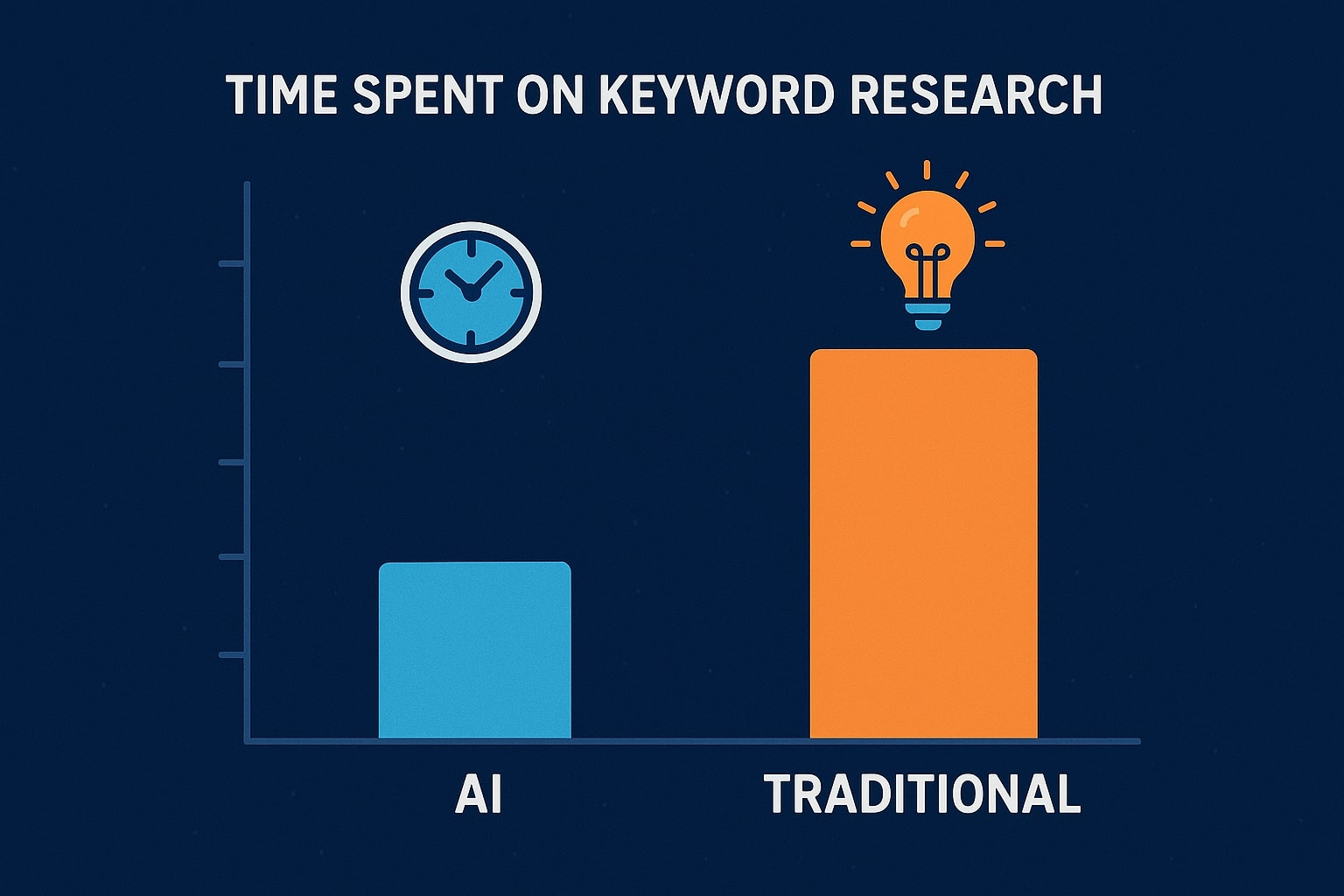
Save 10–20 hours/month, actually rank
Want the full 2026 priority lists, Notion/Google Sheets templates, ready-to-use prompt packs for ChatGPT/Claude/Gemini, and monthly AI updates?
That’s exactly what the premium section gives you — lifetime access or $5/mo for new packs.
How it works
Keyword strategy that works with AI doesn’t mean “prompt and publish.” It means deciding what to optimize or write first, then using AI to execute. This page gives you a single workflow that fits both e‑commerce (product and category pages) and content marketing (blogs, guides).
Cluster — Group keywords by intent (e.g. informational, commercial) using the prompts and templates. You get a manageable list instead of a raw export.
SERP — For each cluster, review what’s already ranking. The workflow helps you see which pages to outrank and what content format wins.
Score & prioritize — Rank difficulty and opportunity so you know what to tackle first. No more guessing which product page or article to optimize next.
Ship — Use the same prompts in ChatGPT, Claude, or Gemini, plus the Notion and Sheet templates, to produce and track content in any market or language.
Frequently asked questions
Who is this for? E‑commerce teams with many product or category pages, content and growth teams publishing articles, and anyone using AI to create content who wants a clear keyword backbone so that content can rank.
What do I get? Prompt packs for keyword clustering and SERP analysis, Notion and Google Sheet templates for tracking and mapping, and a repeatable workflow. One-time purchase = lifetime access; subscription adds new prompt packs each month.
What tools do I need? A browser and access to ChatGPT, Claude, or Gemini. The templates work in Notion and Google Sheets. No $200/mo SEO tools required—the workflow uses AI and free or low-cost templates.
Cluster→SERP→Score→Ship
Tool preview
Examples of the kind of workflow you get—rank tracking and content optimization (replace with your own Rankability or Surfer SEO screenshots).
Rankability Track — rank tracking & AI search visibilitySurfer SEO Content Editor: content score and optimization
What you get
Tool dashboard and SERP data — the workflow in action
One workflow that fits e‑commerce (product/category pages, which to optimize first) and content marketing (blogs, guides, thought leadership): cluster keywords with AI → analyze SERPs → score difficulty → get a prioritized list. Works in any language or market. Templates (Notion, Google Sheets) and prompts for ChatGPT, Claude, Gemini—no hunting for the “right” prompt.
SERP & competition analysisAI prompts for keyword researchNotion & Sheet templatesPriority list & workflow
Ready-made prompts for keyword research and SERP analysis (ChatGPT, Claude, Gemini)
Notion template and Google Sheet for tracking and mapping (e‑commerce or content)
Clear priority order: know what to optimize or write first, anywhere
One-time = lifetime access; or $5/mo for ongoing AI updates (new prompt packs)
Get the exact templates and prompts — no more guessing.
E‑commerce and content teams use this workflow to prioritize what to optimize first and what to write next. One payment, lifetime access. Unlock below.
↓ Unlock templates + prompt packs
Pay button only works when the page is served over HTTP. Run in terminal: cd nano-site-1 && npx --yes serve . then open http://localhost:3000
Get access — templates, prompt packs & Notion/Sheet workflow
Notion & Google Sheet templates
Prompt packs for ChatGPT, Claude, Gemini
Lifetime access (one-time) or $5/mo for new packs
One-time ~$1.50 (Solana) or $2 (card). Or subscribe for ongoing AI updates.
Unlock your Phantom (or wallet) first, then click Pay.
Lifetime access with one-time. Subscription = premium + new prompt packs each month. Cancel anytime. Privacy & security
Your keyword workflow + resources
Follow the process: cluster keywords by intent with AI, analyze SERPs for each cluster, score competition, then prioritize. Use the links below in ChatGPT, Claude, Notion, and Sheets—whether you’re optimizing e‑commerce pages or planning content. No extra subscriptions; works for any market.
Resources — Save these; they’re the same ones used in the workflow.